

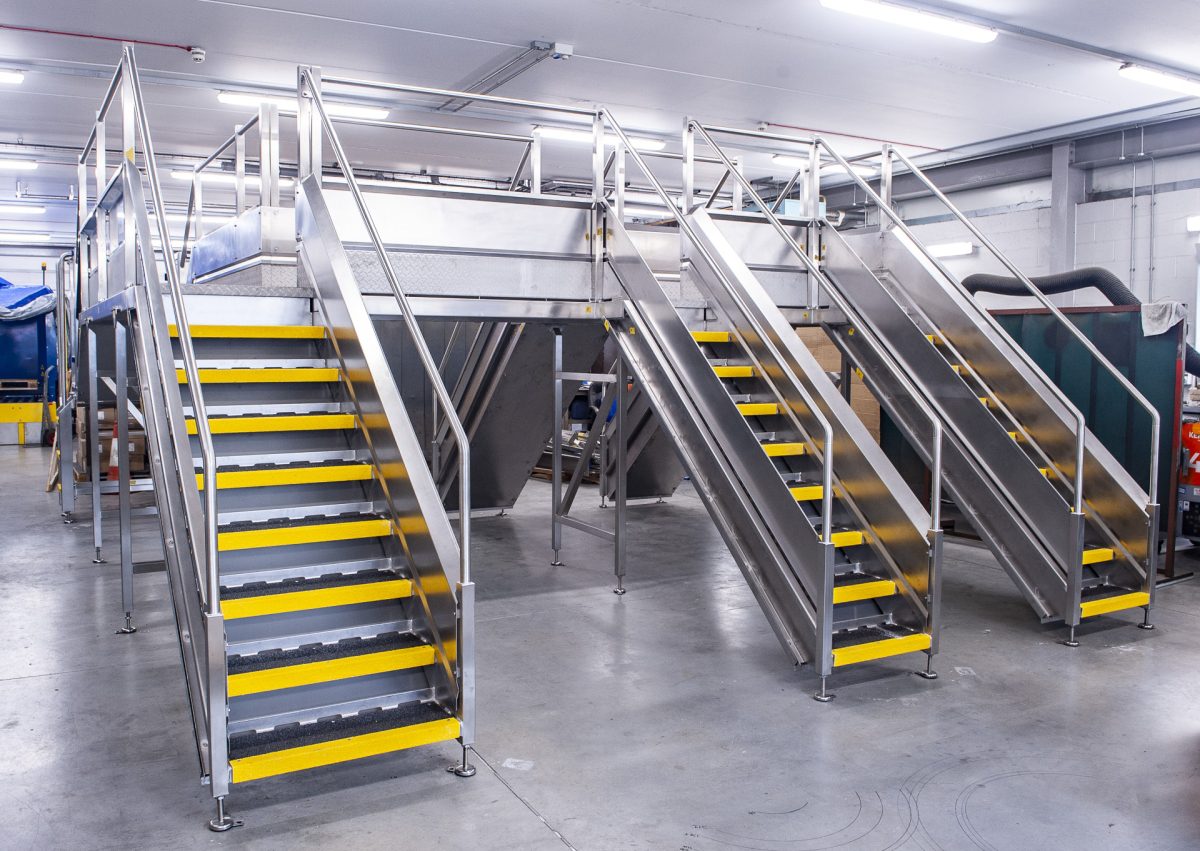
Routine maintenance depends on the route a technician takes to reach equipment, and that route can be an afterthought on commercial roofs. The plant itself gets specified and installed with care, while the path across the roof is often left to chance. Every service visit then inherits whatever delay and risk that creates. Permanent aluminum walkways change that by making access part of the building itself.
Why routine servicing gets deferred
Every facility manager knows the schedule. Rooftop HVAC plant, filtration systems, solar arrays and exhaust fans need regular inspection and servicing. Equipment manufacturers set those intervals for a reason. Small faults caught early stay small and cheap. The problem begins when reaching the unit is harder than servicing it. If anchor points must be checked and a spotter arranged before a twenty-minute filter change, the job becomes a planned event. Planned events get scheduled around everything else, and the maintenance calendar bends around them.
A quarterly inspection can slide to twice a year, then to whenever a complaint forces the issue. Dust builds on coils, belts wear past their service life, and none of those faults become obvious until the unit fails at the worst possible time. Emergency call-outs cost more than planned visits, and the equipment itself can wear out years early when protective servicing keeps slipping. Access difficulty may not appear as a budget line, yet it often determines the building’s actual maintenance schedule. It also shapes how often work is deferred.
The real time cost of temporary access
Temporary access can look inexpensive on paper because scaffold or harness gear appears only when needed and leaves afterward, with nothing permanent to pay for. The cost is in the setup, and it repeats at every single visit. Each trip can begin with equipment hire or erection, anchor checks, permits and briefings. All of that happens before anyone touches the plant that actually needs attention. Temporary setups also need more than one person on site, so visits get batched together to justify the effort. A quarterly inspection may not survive half a day of preparation.
Batching can look efficient, but it means a minor fault found in March may wait until a combined June visit. Minor faults do not always stay minor. A permanent walkway cuts the setup each visit needs. The route is already in place and guarded, so a routine check can happen as scheduled. Inspections can fall on their proper dates, and small problems can be fixed while they are still small. That makes the maintenance calendar easier to keep.
What repeated foot traffic does to the roof
A roof membrane is a thin waterproof layer. It is very good at keeping water out, but it is not built to carry regular foot traffic. Single-ply membranes such as TPO and PVC are only a few millimeters thick. Metal sheeting dents and scratches under concentrated loads. Each trip across the roof carries some chance of damage. Boots grind grit into the surface, tool bags come down hard, and because each mark is small, nobody may notice at the time. The occasional dropped fitting or spilled chemical can add its own puncture. The damage is usually incremental, and small marks accumulate.
Repeated foot traffic and equipment handling can contribute to roof surface wear. Water can find those small punctures long before anyone traces them. By the time a stain appears on a ceiling tile, the insulation below the membrane may already be saturated. A designated walkway concentrates necessary traffic onto a surface built to take it. The membrane then takes less wear, and the roof can last closer to its intended life.
Permanent access and the compliance picture
A business or undertaking that manages or controls a workplace has a duty to ensure safe access to it, so far as is reasonably practicable and to the extent of that control, and rooftop plant makes the roof a work area by default. Codes and standards set out what that access should look like: the National Construction Code framework applies in Australia, fixed platforms and walkways in Australia are covered by AS 1657:2018, and equivalent standards apply in other regions. The details differ, but the shared expectation is that regularly used routes should be permanent, purpose-built structures. A fixed structure makes protection consistent over repeated visits.
Temporary measures can satisfy the rules for a single visit. They leave the compliance work attached to every trip, though, because checks and paperwork must be repeated and the setup must be correct each time. To reduce that repetition and support ongoing alignment with standards like AS 1657, facility designs increasingly incorporate permanent aluminium access systems that give service personnel a defined, guarded route to the plant they maintain. Guardrails can be integrated along the walkway so edge protection runs the full length of the route. Because the structure stays in place, documentation and inspection arrangements set up at installation can carry forward over the life of the system, without starting again at each visit. That makes repeated servicing easier to document.
Keeping the load off the roof structure
Once a permanent walkway is part of the plan, weight becomes a practical question. Every kilogram of walkway is weight the roof structure must carry for the rest of its life. Engineers call this dead load, the permanent static weight of everything fixed to the building. Older roofs and lighter-gauge metal decks often have little spare capacity once the original design loads are accounted for. A heavy access system can require structural checks, local reinforcement, or both.
Aluminum is useful here because of its strength-to-weight ratio. It can provide the rigidity a walkway needs at a fraction of the weight of a comparable steel structure. That means long runs of platform and steps over pipework can cross the roof with a lower dead load than a comparable steel walkway, subject to a structural assessment. Low weight also helps during construction, since components can be carried to the roof by hand or in a goods hoist, avoiding crane lifts over an occupied building. In an existing facility, installation often proceeds without structural redesign.
Assembly without hot work
Steel walkway systems often arrive as sections that need welding or cutting on site. Hot work on a roof brings its own logistics with it. Hot work permits and fire watches are usually required, because sparks and roofing materials are a poor combination. The work is slow and noisy enough to dictate when it can happen at all. On an occupied site, that disruption can be the largest cost of the installation.
Modular aluminum systems usually arrive flat-packed and bolt together with mechanical fixings. There is often no welding, so hot work permits and fire watches may not be needed, though what applies on a given site depends on the system selected and the conditions there. The flat-pack format also helps with access, since compact components are generally easier to move by lift or hoist than large welded sections. One detail still needs care: galvanic corrosion, the electrochemical reaction that occurs when two dissimilar metals sit in contact. This matters where aluminum fixings meet a steel deck or steel supports. Well-designed systems keep the metals separated at those points so the connection stays sound for the long term.
Corrosion and the whole-of-life cost
A walkway lives outdoors for decades, so what it costs to keep matters as much as what it costs to buy. Steel rusts. Even galvanized steel can eventually lose protection at cut edges and wear points, which turns patch painting and recoating into recurring line items. Timber rots and warps, and it asks for treatment and eventual replacement. Aluminum behaves differently because it forms its own oxide layer on contact with air. That layer seals the surface and reforms if it is scratched, so the metal protects itself without painting or chemical treatments, even in coastal air or industrial environments.
A lifecycle cost analysis compares the total cost of owning each option across the building’s life, with every repaint and repair included. On that basis, the cheapest purchase price rarely stays the cheapest. A walkway that needs little beyond periodic inspection and cleaning also avoids another cost: the extra roof traffic that maintaining the walkway would otherwise create. It also keeps the walkway itself from becoming a maintenance task.
What changes for the technician on the roof
All of these structural and financial points connect to the daily experience of the people doing the work. A permanent walkway gives technicians a level, continuous surface across pitches and changes of level, so the trip to the unit becomes an ordinary walk. Grip underfoot comes from the surface finish, and finishes vary between products, so the right choice is the one backed by the manufacturer’s own slip testing and matched to the conditions a project assessment identifies, such as rain exposure or condensate around the units.
Dependability matters most when hands are full, because technicians carry tools and replacement parts, some of them heavy. Carrying loads across uneven or sloping surfaces is where manual handling injuries and dropped equipment tend to happen. A guarded, level route lowers that risk and the fatigue that comes with it, so the technician arrives at the unit ready to work and the visit takes the time it should. When every visit runs that way, preventative maintenance cycles hold their intended intervals, and the plan no longer depends on a scaffolding booking, though wind and wet surfaces can still delay roof work.
A permanent aluminum walkway can pay for itself in the damage it prevents and the servicing it keeps on schedule, and it asks for almost no maintenance in return. For owners planning a new build or approaching a reroof, the practical next step is to map the routes the technicians already take across the roof, and put the walkway there before the first deferred service makes the case for it.