

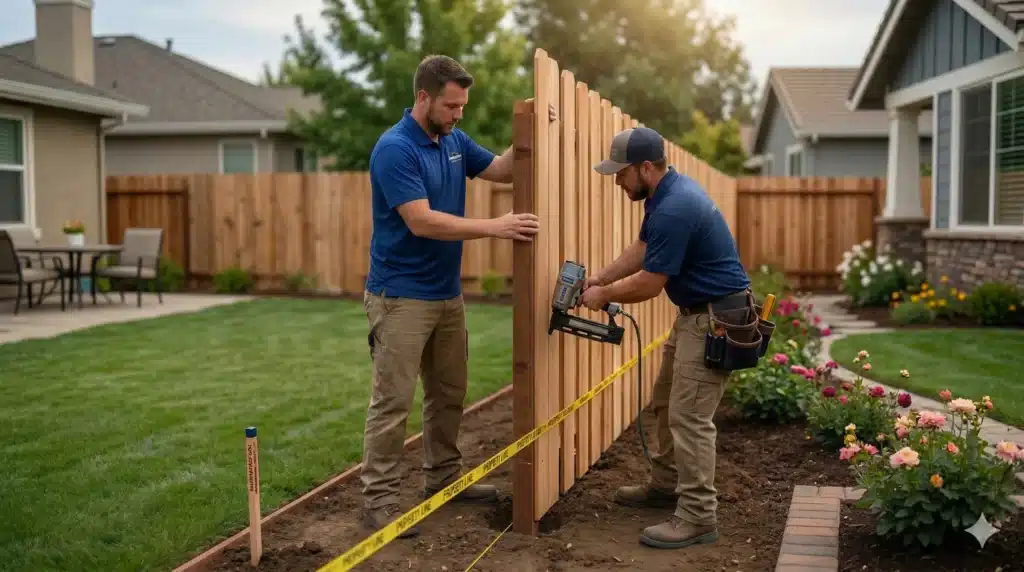
Few domestic issues spark immediate anxiety quite like a disagreement over where your yard ends and your neighbor’s begins. A disagreement over a six-inch strip of turf or an aging wooden fence can quickly turn friendly neighborhood greetings into icy silence, passive-aggressive code enforcement reports, or expensive legal battles.
Homeownership is deeply tied to security, autonomy, and financial investment. When someone builds a structure, plants a privacy hedge, or removes a tree on land you believe is yours, the reaction is rarely purely practical; it is visceral. Yet reacting out of emotion or relying on neighborhood folklore often transforms an easily manageable misunderstanding into a bureaucratic and financial nightmare.
Successfully resolving property line and fence disputes requires a calm, methodical strategy grounded in legal reality, clear communication, and factual documentation.
Why Boundary Disputes Escalate So Quickly
Boundary conflicts rarely happen in a vacuum. Often, they emerge during moments of transition: a new family moves in, someone plans a major landscaping renovation, or an old, rotting fence finally gives out after a winter storm.
The primary catalyst for these fights is the gap between assumed boundaries and legal boundaries. Over decades, property lines blur in the human mind. A homeowner might mow up to a particular row of maples simply because the previous owner did. A chain-link fence installed forty years ago might have been placed two feet inside the true boundary line to avoid tree roots or save on digging costs.
When a new owner arrives and assumes the existing fence line reflects the deed, conflict is almost inevitable. The new party feels entitled to what they see, while the existing neighbor feels protective of territory they have tended for a generation. Without objective data, both parties argue from assumptions, creating an impasse fueled by pride rather than facts.
The Difference Between Visual Markers and Legal Realities
One of the most dangerous mistakes a homeowner can make is assuming that physical landmarks represent legal property lines. Landscaping, utility poles, sidewalks, retaining walls, and old fencing are not legal determinations of ownership.
Plat maps filed with the county provide a general layout of a subdivision, but they are representations rather than precise field measurements. Mortgages frequently require an “improvement location certificate” or a cursory inspection before closing, but these drive-by assessments are not boundary surveys; they merely confirm that a house physically exists on the parcel described in the loan paperwork.
True legal boundaries are dictated by the metes-and-bounds descriptions in your deed, anchored by buried iron survey pins set by licensed professionals. Over time, these pins can become buried under feet of topsoil, disrupted by tree roots, or accidentally pulled out during utility installations.
If you cannot dig down and point to verified iron monuments located by a certified professional, you do not have proof of your property line. You merely have an educated guess.
The First Step: The Low-Stakes Conversation
Before calling the city planning department or sending a formal letter, walk across the yard and talk to your neighbor. The way you initiate this dialogue sets the trajectory for the entire issue.
A confrontational posture—opening with accusations like “Your new fence is on my land”—forces the other person into an immediate defensive crouch. Once pride and defensiveness take over, people will spend thousands of dollars simply to avoid admitting they were wrong.
Instead, frame the matter as a shared puzzle that requires joint clarification:
-
Approach the conversation casually, preferably when neither party is rushing out the door.
-
Use collaborative language: “I noticed you are getting quotes for a new cedar fence. Before you spend money on installation, let’s make sure we both know exactly where the pins are so neither of us runs into permit headaches down the road.”
-
Share any documentation you have, such as an older survey map or your original title paperwork, without demanding immediate concessions.
-
Listen to their perspective on how the yard has been maintained historically. Understanding their assumptions helps you address their concerns directly rather than talking past them.
In many cases, neighbors are equally uncertain about the exact line. Approaching the issue as a mutual effort to protect property values and prevent future headaches can resolve the tension before it takes root.
The Crucial Role of a Professional Boundary Survey
If a calm conversation reveals genuine disagreement, stop arguing immediately. You cannot resolve a boundary dispute through debate; you can only resolve it with a licensed land survey.
Commissioning a Boundary Survey
A boundary survey is not cheap. Depending on parcel size, terrain complexity, geographic location, and the availability of historical records, a professional boundary survey typically costs between $500 and $2,500. However, attempting to resolve a boundary conflict without one is like taking someone to small claims court without receipts.
When hiring a surveyor:
-
Verify that they are licensed and insured in your state.
-
Request a complete boundary survey that includes staking the line and flagging the property corners with physical wood stakes or painted iron pins.
-
Ask for a formal drawing, signed and stamped, that documents all existing permanent structures, encroachments, and fences relative to the true legal line.
Inviting Shared Costs
If you and your neighbor are on civil speaking terms, propose splitting the cost of the survey. A single, mutually commissioned survey conducted by an independent professional eliminates the suspicion that one party hired a “biased” firm. If they decline, fund the survey yourself. The clear title, peace of mind, and indisputable proof it provides will far outweigh the cost if the dispute continues.
Legal Concepts Homeowners Must Understand
Navigating these disputes effectively requires a foundational grasp of how property law approaches boundaries, maintenance, and prolonged possession.
Adverse Possession and Prescriptive Easements
Homeowners often panic over the concept of adverse possession—the legal mechanism through which someone can acquire title to real property by occupying it over a prolonged period. The fear is that if a neighbor’s shed sits two feet over your boundary line for several years, they will automatically own that land.
While adverse possession is real, it is extraordinarily difficult to claim successfully. In most jurisdictions, the occupation must be open, notorious, hostile, and continuous for a statutory period that ranges from 5 to 20 or more years, depending on the state. Some states also require the squatter or encroaching neighbor to have actively paid property taxes on that disputed sliver of land.
A far more common risk is a prescriptive easement, where someone earns the permanent legal right to continue using a portion of your land—such as an encroaching driveway or a walking path—without taking legal title to it.
Crucially, you can defeat a claim of hostile possession instantly by simply granting written permission. If you allow a neighbor to keep a garden bed or temporary shed on your property through a signed, revocable agreement, the use ceases to be “hostile” under the law, rendering adverse possession claims legally impossible.
Boundary Fence Statutes and Maintenance Costs
Fences built directly on a property line are known as division fences or partition fences. In many states, statutes dictate that both adjoining landowners are equally responsible for the reasonable costs of maintaining and repairing a boundary fence, regardless of who originally paid to erect it.
These laws usually require the party seeking replacement to give written notice—often 30 days—along with cost estimates. If the neighbor refuses to contribute without valid reason, the law in states with robust fence legislation may allow you to seek reimbursement through small claims court.
However, shared-cost rules generally apply only to practical, standard fences designed to enclose a yard or keep pets safe. If you want an eight-foot, custom horizontal cedar wall with architectural accents and your neighbor wants a standard six-foot chain-link or basic treated pine fence, you cannot force them to pay for your luxury upgrades. They are typically only obligated to fund half the cost of a basic, functional partition.
Municipal Setbacks, Height Restrictions, and Ordinances
Local municipalities, counties, and homeowner associations (HOAs) maintain specific zoning bylaws governing fences:
-
Setbacks: Many towns do not allow fences directly on the property line, requiring a setback of two inches to three feet inside your boundary.
-
Height limits: Backyard fences are usually capped at six feet, while front-yard fences are frequently restricted to three or four feet to preserve sightlines for motorists.
-
The “Good Neighbor” rule: Local ordinances almost universally require the finished, attractive side of the fence—the side without visible posts and rails—to face outward toward the neighbor or the public street.
-
Permitting: Constructing a fence without pulling the required municipal building permit can result in stop-work orders, daily fines, and a court order to dismantle the entire installation at your expense.
Checking these regulations at your town hall before ordering materials provides leverage in negotiations and protects you from building a non-compliant structure.
Practical Resolutions That Avoid the Courtroom
Court should always be the absolute last resort in any neighborhood conflict. Filing a lawsuit against someone who lives forty feet from your bedroom window guarantees a toxic living environment for years.
Explore these diplomatic compromises before hiring an attorney:
Written Boundary Line Agreements
If the survey reveals that an existing fence or driveway encroaches by a few inches, but neither party wants to tear down an expensive structure, execute a written boundary line agreement or a license agreement.
Drafted with the assistance of a real estate attorney and recorded with the county recorder of deeds, this document acknowledges the true property line while granting the neighbor permission to maintain the existing structure for its natural lifespan. When the fence falls or the driveway needs replacement, the new installation must retreat to the correct legal boundary. This protects your deed from adverse possession while preserving cordial relations.
Community Mediation Services
If communication stalls and emotional tension peaks, look into local non-profit or municipal mediation programs. A trained, neutral third-party mediator does not make legal rulings; instead, they facilitate a structured conversation where both neighbors can air grievances, identify underlying priorities, and craft a binding compromise. Mediation costs a fraction of legal litigation and boasts a high success rate because both parties actively design the final outcome.
Lot Line Adjustments
If the encroachment is significant and permanent—such as an entire garage corner or a concrete pool deck sitting across the boundary—the most practical path may be a formal lot line adjustment.
In this scenario, the encroaching neighbor purchases the small parcel of land they occupy at fair market value, pays all survey and recording fees, and officially moves the boundary line through municipal planning approval. While it requires adjusting deeds and mortgage balances, it permanently clears title defects and prevents future buyers from inheriting the dispute.
When Hiring an Attorney Is Unavoidable
Despite your best efforts at diplomacy, some conflicts cannot be reasoned away. If a neighbor begins building on your property after being shown a certified survey, actively threatens you, or files false police reports, you must protect your property rights through legal counsel.
Retain an attorney who specializes specifically in residential real estate and boundary litigation. They can send a formal cease-and-desist letter on firm letterhead, which carries far more psychological weight than a spoken objection.
If the encroachment persists, your attorney can file for an emergency injunction to halt construction, followed by an action for quiet title or ejectment. A quiet title lawsuit asks the court to formally declare the true boundary line and extinguish any competing claims.
Be clear-eyed about the math before proceeding. A full-scale quiet title action can easily cost $10,000 to $50,000 or more in legal fees. If the land in dispute is worth $1,500, spending tens of thousands of dollars to defend it out of stubborn pride is a financial catastrophe. Reserve litigation for situations where your home’s structural integrity, resale value, or legal access is substantially compromised.
The Long View on Property Lines
Living alongside neighbors is an exercise in practical diplomacy. While legal boundaries are rigid lines drawn on paper, the human relationships that cross those lines are flexible and delicate.
Protecting your property rights does not require hostility, and being a good neighbor does not mean surrendering your land. By securing objective facts through a licensed survey, understanding local fence ordinances, and addressing issues early through clear, collaborative conversations, you can defend your investment while maintaining the peace and livability of your neighborhood.
Comments are closed.