

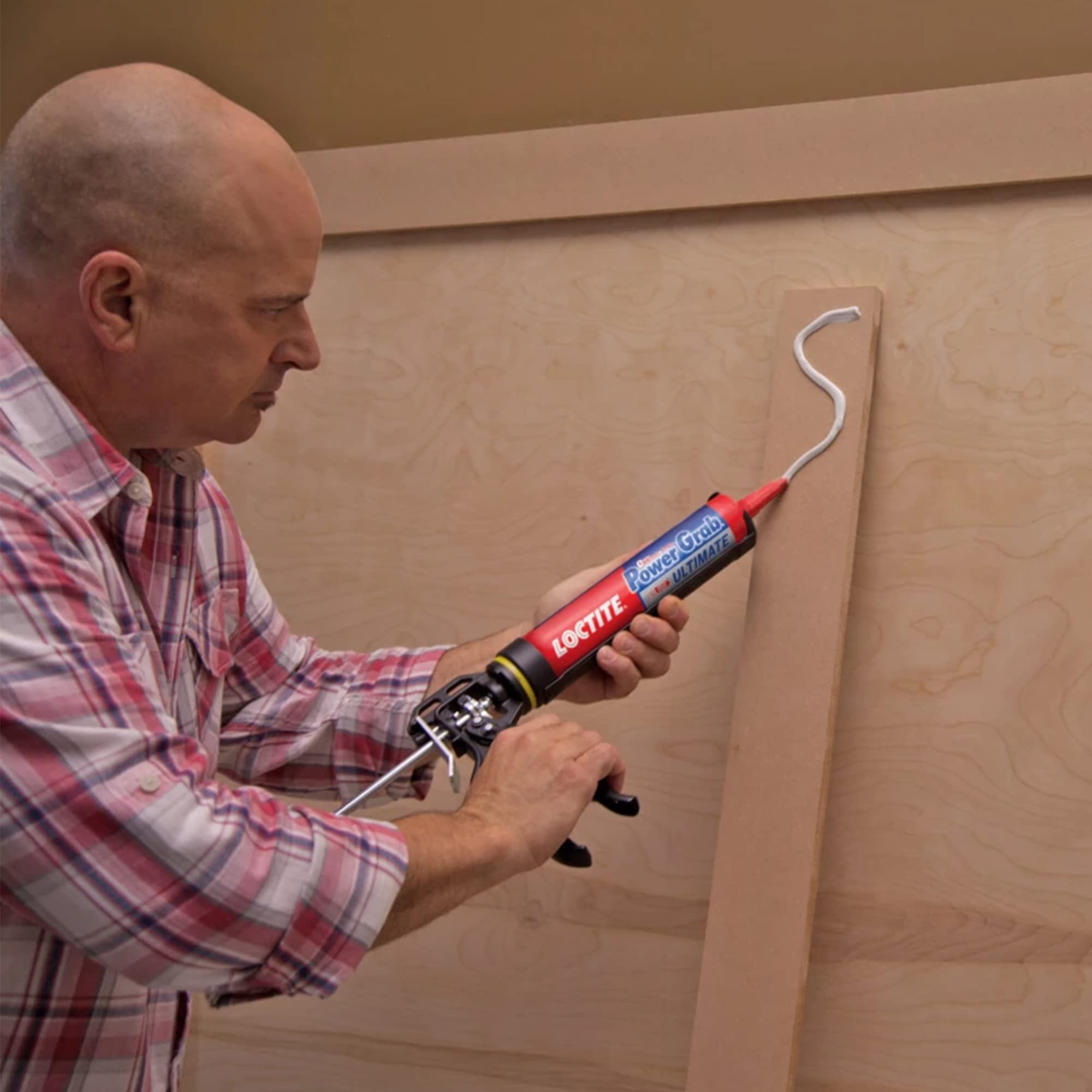
In the world of home improvement, many projects rely on visible fasteners like screws, nails, or bolts. However, some of the strongest bonds in a building are created by a material that is designed to be completely hidden from view. All purpose construction adhesive is a heavy-duty bonding agent that has revolutionized the way we assemble everything from subfloors and drywall to decorative stone veneers and landscaping blocks. For the average DIYer, understanding the science behind this “liquid nail” is the key to choosing the right product and ensuring a project stands the test of time.
The Chemistry of a High-Strength Bond
At its most basic level, construction adhesive is a high-viscosity paste designed to create a permanent, structural bond between two surfaces. Unlike regular craft glue or wood glue, which are often water-based and thin, construction adhesives are engineered to fill gaps and remain flexible even after they have fully cured. Most modern formulas are either solvent-based or polymer-based. Solvent-based adhesives dry as the chemicals evaporate, while advanced polymer versions, often called silane-modified polymers, react with moisture in the air to harden.
One of the unique characteristics of these adhesives is their ability to bond dissimilar materials. Because the adhesive is thick and tacky, it can bridge the gaps between a slightly uneven piece of lumber and a flat sheet of plywood. The adhesive seeps into the microscopic pores of the materials, creating a mechanical interlock that is often stronger than the materials themselves. This gap-filling capability is what makes it an essential tool for flooring projects where eliminating squeaks is a top priority.
The Importance of Tack and Open Time
For a DIYer working on a project, two of the most important technical terms to understand are tack and open time. Tack refers to the immediate “grab” the adhesive has when you press two surfaces together. High-tack adhesives are particularly useful for vertical applications, such as installing paneling or backsplash tile, where you need the material to stay in place without sliding down the wall while the bond sets.
Open time, on the other hand, is the window of opportunity you have to adjust the pieces before the adhesive begins to skin over and lose its effectiveness. If you are working on a large project like laying a subfloor, you want an adhesive with a longer open time so you can apply it to several joists at once without worrying about the glue drying before you can lay down the plywood. Understanding these properties allows you to plan your workflow efficiently and avoid the frustration of a bond that fails because it dried too quickly.
Application Techniques for Success
The way you apply construction adhesive is just as important as the formula you choose. Most professionals recommend applying the adhesive in a continuous zigzag bead, rather than in small dots or a flat smear. This pattern ensures that when the two surfaces are pressed together, the adhesive spreads evenly to cover the maximum surface area without being squished out of the sides.
It is also vital to ensure that the surfaces are clean, dry, and free of dust or grease. Even the strongest adhesive in the world will fail if it is trying to bond to a layer of loose sawdust rather than the actual wood. For non-porous materials like metal or certain plastics, a light sanding can help roughen the surface and provide more “tooth” for the adhesive to grab onto.
Conclusion
All-purpose construction adhesive is a remarkably versatile tool that provides strength and stability where mechanical fasteners might fall short. By understanding how the chemistry works to fill gaps and how factors like tack and open time influence your project, you can move forward with confidence on your next renovation. Whether you are silencing a squeaky floor or securing a heavy stone countertop, this powerful bonding agent ensures that your work remains solid for years to come. It truly is the silent partner in every successful construction project.
Comments are closed.