

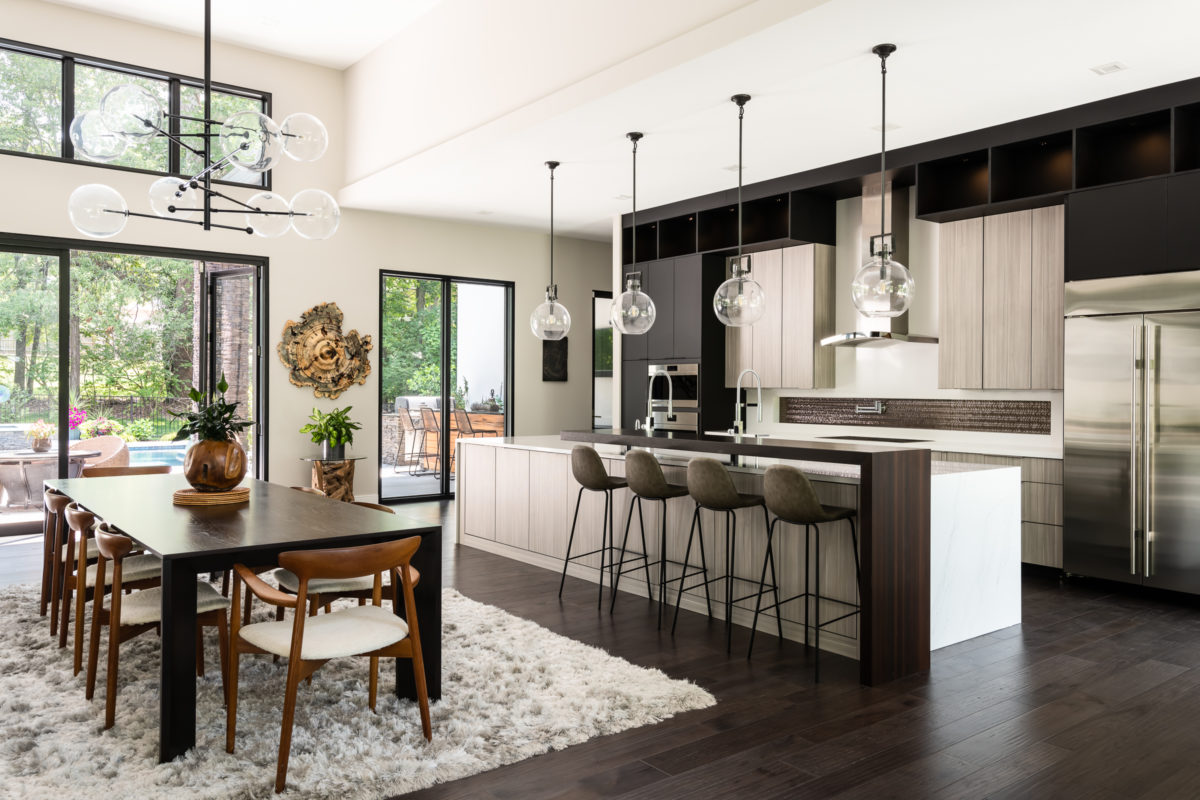
Open kitchen design has become one of the most popular layout choices in modern homes. By removing walls and barriers, this design creates a seamless connection between the kitchen, dining, and living areas. While open kitchens offer visual appeal and social benefits, they are not the right fit for every household.
Understanding both the advantages and drawbacks helps homeowners decide whether an open kitchen aligns with their lifestyle and space.
What Is an Open Kitchen Design?
An open kitchen design eliminates traditional walls, allowing the kitchen to flow directly into adjacent living spaces. This layout emphasizes openness, shared light, and multifunctional living, making it especially popular in contemporary and minimalist homes.
Pros of Open Kitchen Design
Enhanced Natural Light
One of the biggest advantages of open kitchens is improved lighting.
Benefits include:
- Sunlight reaching multiple areas of the home
- Reduced reliance on artificial lighting
- Brighter, more inviting living spaces
Natural light enhances both aesthetics and energy efficiency.
Improved Social Interaction
Open kitchens make it easier to stay connected.
This layout allows you to:
- Interact with guests while cooking
- Supervise children from the kitchen
- Create a more inclusive entertaining space
For families and frequent hosts, this social flow is a major benefit.
Greater Sense of Space
Removing walls can make even smaller homes feel larger.
Open kitchens:
- Create visual continuity
- Reduce feelings of confinement
- Improve overall room proportions
This design is particularly effective in compact homes and apartments.
Flexible Layout and Functionality
Open kitchens offer adaptable design options.
Homeowners can easily:
- Add kitchen islands for seating and prep
- Combine dining and cooking areas
- Reconfigure furniture as needs change
Flexibility makes the space more future-proof.
Increased Home Value Appeal
Many buyers prefer open layouts.
An open kitchen can:
- Improve marketability
- Align with modern design trends
- Enhance perceived square footage
While not guaranteed, open kitchens often attract broader buyer interest.
Cons of Open Kitchen Design
Noise and Odor Spread
Without walls, sound and smells travel freely.
Common issues include:
- Cooking noise reaching living areas
- Food odors lingering throughout the home
- Difficulty creating quiet zones
This can be challenging for households that value separation.
Limited Privacy
Open kitchens offer little visual or functional privacy.
This may be problematic when:
- The kitchen is cluttered or messy
- Multiple activities occur simultaneously
- Homeowners prefer defined spaces
Not everyone enjoys constant visibility.
Higher Emphasis on Cleanliness
In an open layout, the kitchen is always on display.
This requires:
- Frequent cleaning
- Better organization
- Minimal visual clutter
For busy households, this can feel demanding.
Design Consistency Challenges
Open kitchens must visually align with surrounding spaces.
Potential drawbacks include:
- Limited freedom with bold colors or finishes
- Higher costs to maintain cohesive design
- Need for coordinated lighting and materials
Poor design planning can disrupt visual harmony.
Less Wall Space for Storage
Removing walls can reduce cabinetry options.
This may lead to:
- Fewer upper cabinets
- Reliance on islands or pantries
- Higher costs for custom storage solutions
Storage planning becomes critical in open layouts.
Is an Open Kitchen Right for You?
An open kitchen works best for homeowners who value connection, flexibility, and modern aesthetics. However, those who prioritize privacy, quiet, and defined spaces may prefer a more traditional layout.
Evaluating your daily routines, entertaining habits, and storage needs is essential before committing to this design.
Frequently Asked Questions
Are open kitchens suitable for small homes?
Yes, open kitchens often make small homes feel larger and brighter when designed thoughtfully.
Do open kitchens make homes noisier?
They can, especially without sound-absorbing materials or strategic layout planning.
Is an open kitchen more expensive to remodel?
Costs vary, but removing walls and updating finishes across shared spaces can increase expenses.
Can open kitchens still have storage?
Yes, with well-designed islands, pantries, and lower cabinetry, storage can be optimized.
Are open kitchens going out of style?
They remain popular, though some homeowners now prefer semi-open designs for balance.
How can odors be controlled in an open kitchen?
High-quality range hoods and proper ventilation help minimize odor spread.
Can an open kitchen be closed later?
Yes, walls or partitions can be added, but it requires additional renovation work.
Open kitchen design offers both functional and aesthetic advantages, but it’s most successful when matched carefully to lifestyle needs and thoughtful planning.
Comments are closed.